 DataCareph
Top 10 Cities with the Highest Cybersecurity Readiness — What Global Leaders Can Teach Businesses
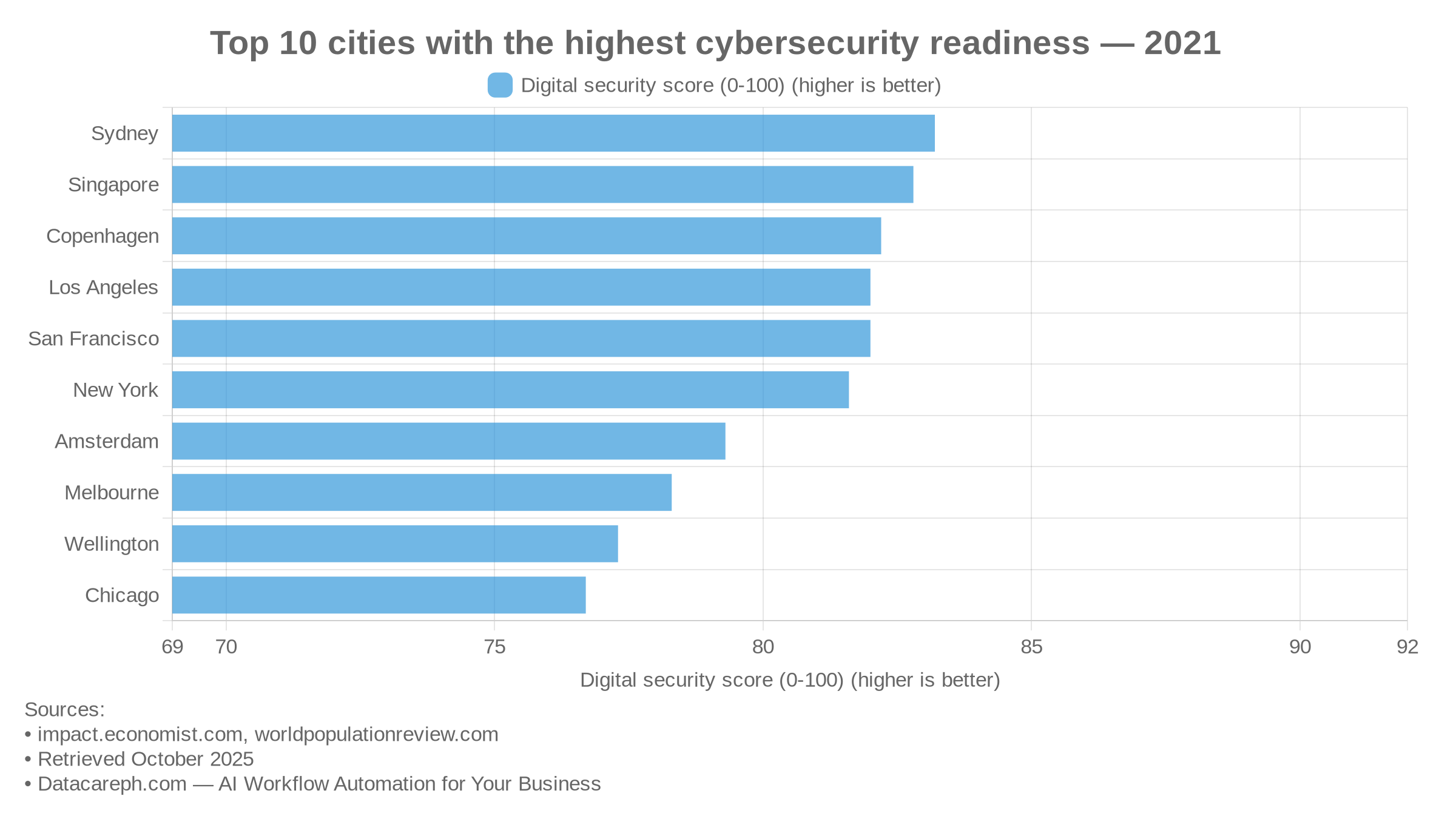
This article analyzes the “Top 10 cities with the highest cybersecurity readiness — 2021” report, powered by DataCareph workflow and research automation, offering insights not only into which cities lead but also what lessons businesses and professionals can draw from these benchmarks.
# Top 10 Cities with the Highest Cybersecurity Readiness — What Global Leaders Can Teach Businesses
Introduction
Cybersecurity readiness is no longer optional—it’s a defining factor for global competitiveness, urban safety, and economic resilience. As digital threats grow more sophisticated, cities around the world are racing to strengthen their defenses against cyberattacks. The latest findings from the Safe Cities Index 2021 highlight which urban centers have achieved the highest digital security preparedness.
This article analyzes the “Top 10 cities with the highest cybersecurity readiness — 2021” report, powered by DataCareph workflow and research automation, offering insights not only into which cities lead but also what lessons businesses and professionals can draw from these benchmarks. You can further read more automation case studies
Why It Matters
Strong cybersecurity readiness brings significant benefits but also presents challenges:
Benefits:
- Protection of critical infrastructure such as utilities, transport, and healthcare systems.
- Increased trust among citizens and investors, reinforcing a city’s role in the global economy.
- Enhanced resilience in the face of rising cyberattacks, ransomware, and data breaches.
Challenges:
- Rapidly evolving threat landscapes require constant updates to strategies and technologies.
- Cities must balance investment in cybersecurity with other pressing needs, such as physical infrastructure or healthcare.
- Skills shortages in cybersecurity talent remain a global issue, even in top-performing cities.
For businesses, studying these leading cities provides a blueprint: the measures that cities adopt to protect their digital ecosystems are equally applicable to organizations seeking to safeguard their own networks and data.
Methods: How the Research Was Automated
The insights presented here were extracted through DataCareph’s research automation pipeline, which streamlined the collection and analysis of authoritative global indices. Specifically:
- Primary Source Integration: DataCareph ingested and parsed structured data from the Economist Intelligence Unit’s Safe Cities Index 2021 (digital security pillar).
- Validation: Results were cross-verified against secondary sources such as WorldPopulationReview to ensure accuracy and global comparability.
- Automation Workflow: JSON structuring allowed automatic ranking of cities based on their Digital security score (0–100).
- Visualization-Ready Outputs: DataCareph’s workflow standardized the data into a chart-ready format with metadata (
chartTitle,legendLabel,resources).
This method ensured consistency, reduced human error, and allowed analysts to focus on interpretation rather than manual collection.
The Top 10 Cities in Cybersecurity Readiness (2021)
Based on Digital security scores (0–100):
- Sydney — 83.2
- Singapore — 82.8
- Copenhagen — 82.2
- Los Angeles — 82.0
- San Francisco — 82.0
- New York — 81.6
- Amsterdam — 79.3
- Melbourne — 78.3
- Wellington — 77.3
- Chicago — 76.7
Insights from the Leaders:
- Sydney’s top ranking demonstrates how proactive governance, public-private collaboration, and investment in digital resilience can elevate cybersecurity readiness.
- Singapore continues to prove its role as a smart city leader, leveraging advanced regulatory frameworks and national-level cyber strategies.
- Copenhagen and Amsterdam reflect Europe’s strong emphasis on data privacy and compliance (notably GDPR), aligning city resilience with business practices.
- U.S. cities (Los Angeles, San Francisco, New York, Chicago) show the importance of innovation ecosystems, but also underscore the balancing act of defending against frequent cybercrime in highly connected economies.
Common Mistakes and Pitfalls
Even top-performing cities face pitfalls that businesses should also avoid:
- Over-reliance on technology: Tools without strategy or skilled operators create vulnerabilities.
- Neglecting awareness training: Human error remains the leading cause of breaches; investment in systems must be paired with workforce education.
- Lagging regulatory updates: Cyber laws must keep pace with emerging threats; outdated frameworks hinder readiness.
- Ignoring supply chain risks: Weak links in third-party providers can undermine otherwise strong cyber defenses.
Conclusion
The Top 10 cities with the highest cybersecurity readiness — 2021 rankings reveal not only who leads but also how. Cybersecurity readiness is built on a foundation of governance, investment, compliance, and education.
For businesses and professionals, the lesson is clear: adopting strategies modeled by these cities—continuous adaptation, public-private collaboration, and investment in skills—will yield stronger resilience in the digital age.
As cyber risks continue to escalate, readiness is no longer a competitive edge; it is a necessity. The question is not whether to act, but how quickly.